
 630-409-8184
How Do Courts Handle False Allegations in Divorce?
 It’s not surprising that divorce can cause strong feelings, acts of desperation, and even revenge. Sometimes, this brings out the worst in people who are willing to make accusations that are not true. False allegations in divorce can involve claims of abuse, addiction, cheating, or bad parenting. These accusations can damage your reputation and drag out your case. Even worse, false accusations have the potential to affect child custody decisions.
Illinois courts take all allegations seriously, but judges understand that some people make false claims to gain an advantage. If your spouse is lying about you to try to get the upper hand, you need help from an experienced DeKalb County divorce attorney with The Law Office of Matthew M. Williams, P.C..
Common False Allegations in Divorce
False allegations are untrue claims one spouse makes about the other during divorce proceedings. Common types of false allegations in divorce include:
-
Claims of domestic violence or abuse
-
Accusations of child abuse or neglect
-
Allegations of substance abuse
-
Claims of mental illness
-
False accusations of infidelity
Some people make these claims hoping to win custody or get a better property settlement. Others act out of anger or revenge.
Do Illinois Divorce Courts Investigate False Allegations?
Illinois courts do not simply take allegations at face value. Take one common situation in which parents sometimes lie to manipulate the situation: Child custody battles. According to Illinois statute 750 ILCS 5/602.10, courts must make custody decisions based on the best interests of the child. This requires examining evidence carefully.
When serious accusations about bad behavior are made, the judge may appoint a guardian ad litem, which is a lawyer who represents the children's interests and investigates independently. For abuse allegations, the court might order a home study where a social worker visits each parent's home. Mental health evaluations may be required if someone claims the other parent has psychological problems. The court can also require drug or alcohol testing if substance abuse is alleged.
Fortunately, the burden of proof falls on the person making the allegation. Without evidence, false allegations cannot go too far.
What Happens if Your Spouse Lies About You During Divorce?
Making false allegations can backfire in serious ways. If the court believes that someone made false allegations, several consequences can follow.
First, the court may view the person who has lied as untrustworthy. This can hurt that person’s position on other divorce issues. In custody cases, judges may also see false allegations as evidence of poor judgment or an inability to share custody. This can lead to less parenting time or changes to custody arrangements.
In cases where a spouse makes serious and obviously false allegations, courts can also punish that person. Sanctions might include ordering the person who made false allegations to pay the other spouse's attorney fees, fining them, or holding them in contempt of court. In extreme cases involving false reports to police or child protective services, criminal charges are possible.
Can My Spouse Lie About Me to Get Custody of Our Kids?
Child custody cases are perhaps the most common reason for false accusations because the stakes are so high. An article in Psychiatric Times suggests that false allegations are made in as many as 35 percent of cases. Parents who want to limit the other parent's time with the children may make serious accusations, hoping to influence the judge's decision.
False accusations in custody cases often involve claims of abuse or neglect. A parent might falsely claim the other parent physically harms the children or exposes them to dangerous situations. They might say the other parent uses drugs or alcohol around the kids, or leaves them unsupervised. Some parents make false claims about each other’s mental health or parental alienation.
When these allegations are made, Illinois courts must deal with two issues at the same time. First, the court must take claims of child abuse seriously and act quickly to protect children who are in danger. At the same time, the court has to avoid making custody decisions based on lies. After all, a child’s relationship with a parent is at stake. This is why courts conduct thorough investigations before changing custody arrangements.
What if Child Protective Services Gets Involved in Our Custody Case?
The Illinois Department of Children and Family Services may need to get involved if abuse or neglect is reported. A guardian ad litem may be assigned to a case to try to uncover the truth and find out what is best for the children, given the situation. A guardian ad litem will interview the children, watch the children with each parent, and report what they see to the court. Parents may be psychologically evaluated.
If investigations reveal that one parent lied about the other, the parent who did this faces serious consequences. Courts view false accusations about child safety as particularly harmful because they waste court resources. They also traumatize children who must go through investigations, and show that the accusing parent thinks it’s more important to win their case than to focus on what the children need. A parent who makes false allegations may lose custody entirely or have their parenting time significantly reduced.
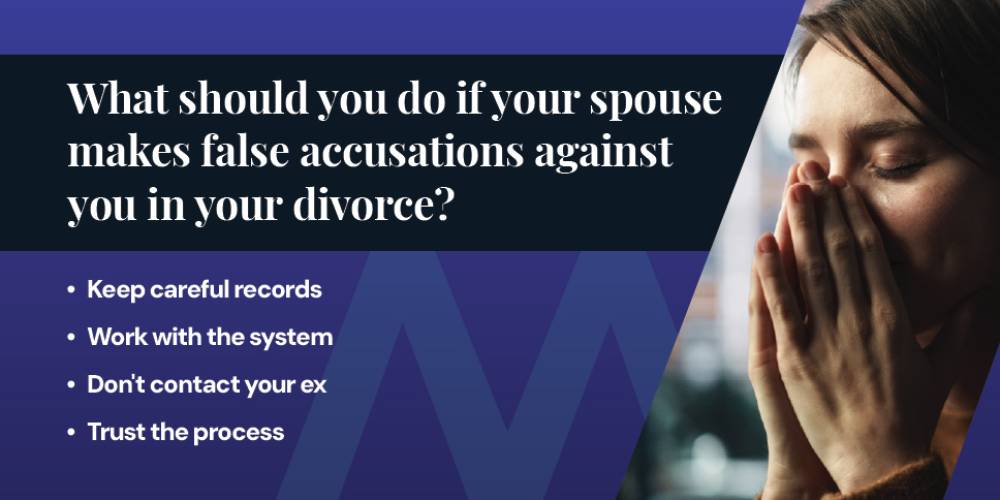
How Can You Protect Yourself Against False Allegations?
If your spouse makes false allegations against you, stay calm and follow your attorney's advice.
Keep Records
Keep track of your interactions together; don’t talk unless you’re in public or using a system that can record your interaction, like email or text message. Keep a calendar showing when you spend time with your kids.
Work with the System
Cooperate fully with any investigations. If the court orders an evaluation or home study, participate completely and honestly. Follow court orders exactly, especially regarding parenting time and communication.
Don’t Harass Your Ex
Don’t show up unannounced. Never use threats or violence of any kind. If your ex is able to get a temporary restraining order against you, follow it carefully, no matter how absurd it may feel. Don’t try to get in touch with your ex or try to get them to retract their accusations.
Trust the Process
False accusations tend to have a way of being uncovered through the court process. If your ex is lying about your behavior and trying to get the upper hand as a result, they will have to prove their claims are true. You will help your case by being on your best behavior and working closely with a good attorney.
Call a DuPage County Divorce Attorney Today
If your spouse is lying about you and harming your odds of getting child custody, you need a good attorney. Our DeKalb County family lawyers at The Law Office of Matthew M. Williams, P.C. have over 25 years of combined experience helping clients get through difficult divorce situations.
Our firm focuses on mediation and collaborative divorce to help families transition with less conflict. We offer free consultations to discuss your situation. Call The Law Office of Matthew M. Williams, P.C. at 630-409-8184 to schedule your consultation today.






Ready to Get Started?
To schedule a free consultation with Aurora divorce attorney, Matthew M. Williams, call 630-409-8184 or fill out the form below.



Aurora
1444 North Farnsworth Ave., #307
Aurora, IL 60505
P 630-409-8184
MAP + DIRECTIONS
BY APPOINTMENT ONLY
Yorkville
520 E Kendall Drive, Suite C-1
Yorkville, IL 60560
P 630-409-8184
MAP + DIRECTIONS


